


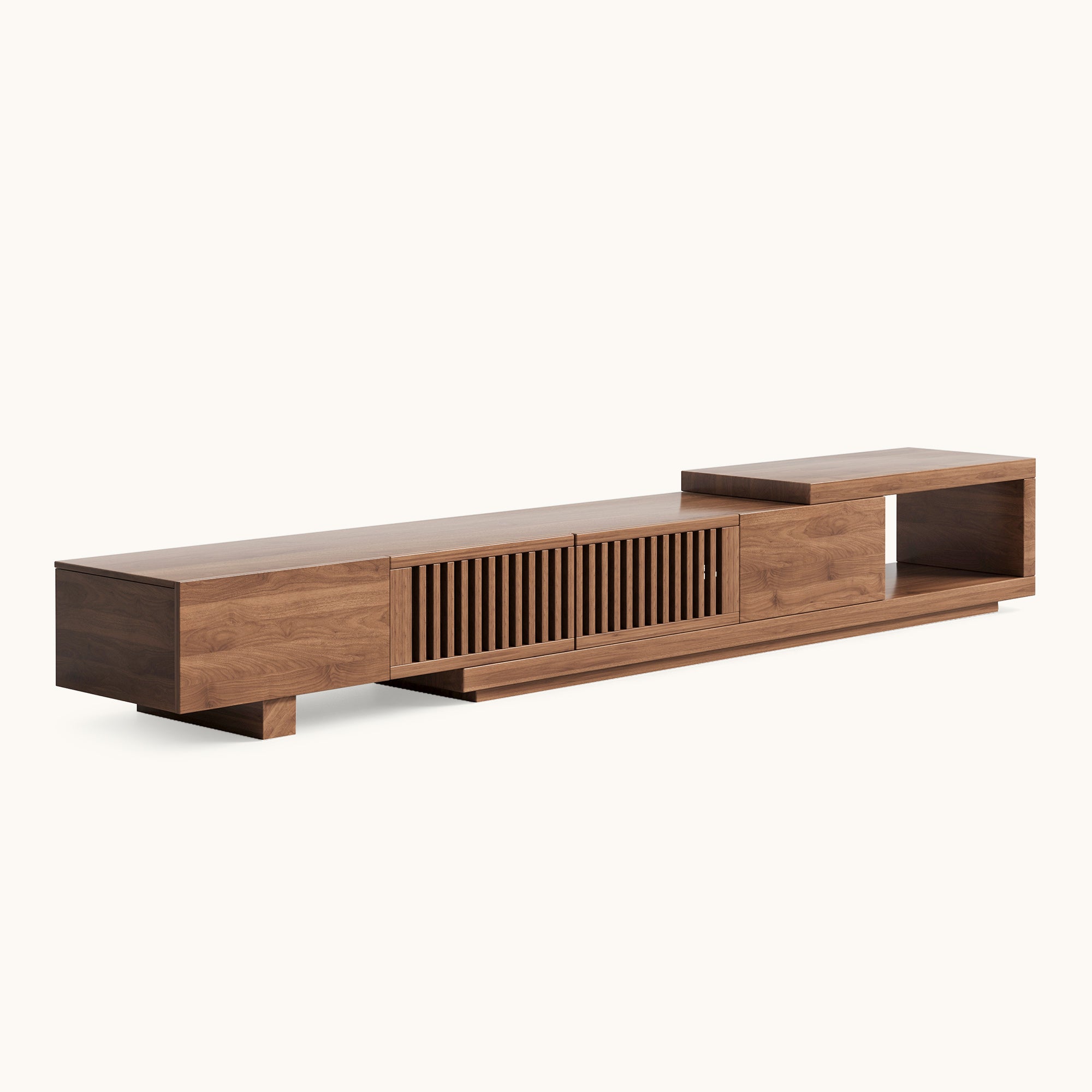


A walnut coffee table is often the first piece buyers shortlist when they want warmth, visible grain, and a surface that ages with character rather than against it. But walnut is only one answer to a question every living room poses: which material will actually hold up to your daily life? Wood, marble, glass, and metal each solve a different problem—and each creates a different maintenance routine. This guide compares all four on durability, care, style fit, and real-world livability, with a closer look at how a walnut piece performs alongside its stone, glass, and metal counterparts. The goal is not to crown a single winner, but to match material behaviour to the way you actually use the space.
The comparison at a glance
Before the detail, here is the short version. The table below is the fastest way to see where each material wins and where it asks for more from you.
| Material | Durability in daily use | Maintenance reality | Style signature | Relative cost | Best suited to |
|---|---|---|---|---|---|
| Wood (walnut) | Good—Janka hardness around 1,010 lbf; can dent and water-mark, but solid tops can be sanded and refinished | Moderate—coasters and occasional oiling; walnut veneer wipes clean but dislikes standing water | Warm, mid-century, organic; grain makes each piece unique | $$–$$$ | Lived-in lounges, families, anyone who wants a surface that improves with patina |
| Marble | Strong but brittle—can chip; porous surface stains and etches on contact with acid | High—seal every 6–12 months; wipe spills immediately; no acidic cleaners | Luxurious, sculptural, cool to the touch | $$$–$$$$ | Formal sitting rooms, low-traffic showpieces, design-led interiors |
| Glass | Will not stain, but can shatter or chip; tempered glass is safer but not indestructible | Low effort but high visibility—fingerprints, dust, and smudges show clearly | Light, airy, visually quiet; makes small rooms feel larger | $–$$ | Small apartments, modern minimalist schemes, rooms that need visual breathing space |
| Metal (frame or top) | High—powder-coated steel resists impact and scratches; solid metal tops are extremely hard-wearing | Low—damp wipe; powder coat hides minor wear better than gloss finishes | Industrial, architectural, contemporary; can read cold without a mixed-material top | $–$$$ | High-traffic homes, kids and pets, pairing with wood or stone tops |
Wood, and why walnut keeps appearing on shortlists
Wood is the material most people instinctively trust in a living room, and walnut sits in a useful middle ground within that category. Its grain is finer and more figured than oak, its colour runs from chocolate to reddish-brown, and its Janka rating of roughly 1,010 lbf gives it enough hardness for everyday use without making it so dense that it feels unyielding. That balance is why a walnut piece can carry mid-century lines cleanly and still feel at home in a warmer, more eclectic room.
The trade-off is honesty: wood responds to its environment. A wet glass left overnight can leave a ring; a hot mug can dull the finish; dry indoor air can cause slight seasonal movement. Solid walnut can be sanded back and refinished if the surface becomes worn, which is not true of veneered marble or coated glass. Veneered walnut—where a thin layer of real walnut sits over a stable engineered core—offers the same grain with greater resistance to warping, and it wipes clean with a slightly damp cloth. For a fuller routine, the solid wood care guide covers oiling schedules, humidity control, and the small habits that keep a timber top looking consistent for years.
If the goal is a living room that feels organised rather than merely decorated, wood also plays well with storage. The mid-century expandable walnut table is a useful example: the walnut finish gives the room warmth, while the expandable top and hidden compartment handle the everyday clutter that otherwise migrates to the floor or sofa. It solves a problem—flexible surface area in a smaller footprint—rather than simply occupying space. That is the kind of decision a material comparison should surface.
For buyers who prefer a rounder silhouette, the vintage round walnut table shows how the same timber reads differently when the edges soften. Round wood tables are easier to walk around in tight rooms and tend to make conversation seating feel less formal. If you are weighing shapes rather than materials, the comparison of round versus rectangular coffee tables explains how room proportions and traffic flow should drive that decision. The material has not changed; the shape has, and shape changes how forgiving a material feels in daily use.
Marble: the statement surface with a strict care contract
Marble earns its place in design photography for obvious reasons. No two slabs vein alike, the surface reflects light in a way that makes a room feel more considered, and the weight of stone communicates permanence. But marble is not a low-maintenance material dressed up as one. It is porous, acid-sensitive, and prone to etching from wine, citrus, coffee, and vinegar-based cleaners. A red-wine spill that would wipe off walnut can leave a permanent dull mark on calcium-based stone.
Sealing every six to twelve months helps, but it does not make marble stain-proof; it buys time. Chips at the edge are repairable by a stone specialist, but the repair is visible under raking light. For households with young children, pets, or a habit of eating on the sofa, marble demands a level of vigilance that many people underestimate. It is best understood as a low-traffic luxury surface rather than a family workhorse.
Where marble does make sense is in a room where the table is primarily visual—a formal sitting area, a study, or a lounge used for drinks rather than meals. In those settings, the coolness of stone against warm wood flooring or a textured rug is a deliberate contrast, not an inconvenience. The material choice becomes part of the room’s composition rather than a daily negotiation.
Glass: visual space at the cost of visual calm
Glass solves a problem that solid materials cannot: it makes a small room feel less full. A glass-top table allows sightlines to pass through, so the floor and rug remain visible and the seating arrangement reads as lighter. It also refuses to stain, which is a genuine advantage over both wood and marble.
The catch is that glass is visually honest to a fault. Fingerprints, dust, paw prints, and smudges show up immediately, and a glass surface requires more frequent wiping than a matte wood or powder-coated metal top. Tempered glass reduces the risk of dangerous shattering, but it can still chip at the edge if something heavy strikes it. In a home with toddlers who use the table as a launchpad, glass is rarely the relaxed choice.
Glass works best when it is paired with a frame that does some of the visual work—a sculptural metal base, a wood stretcher, or a nesting design that adds depth. It is also a sensible option for renters or design-conscious buyers who change schemes often, because glass reads neutral against almost any palette.
Metal: the frame material that quietly outperforms
Metal rarely gets top billing in coffee-table conversations, but it is often the reason a table survives daily life. Powder-coated steel frames resist impact, scratches, and moisture far better than most people expect, and a damp wipe is usually all the maintenance required. That is why metal appears so often as the base beneath wood, stone, or glass tops—it provides stability without asking for attention.
The limitation is stylistic rather than functional. An all-metal table can feel cold or industrial in a room that is trying to be warm, and gloss metal finishes show scratches more than matte or textured powder coats. The most practical use of metal is as a supporting material: a black steel frame under a walnut or marble top gives you the durability of metal where it matters—at the joints and legs—while keeping the surface material you actually want to touch and look at.
A nesting set illustrates this well. The space-saving nesting set pairs two round tops with powder-coated steel frames, so the tables can be separated for guests and tucked away afterwards. The metal frame does the structural work; the tops do the visual work. That division of labour is how metal earns its place in a living room without dominating the scheme. The same nesting concept is also available in a second round nesting variant, which gives buyers another size and finish to compare against the first.
For anyone who needs the table to function as a desk or dining surface, the lift-top storage table shows the same principle in a different format. A metal lifting mechanism raises the walnut-finished top to a comfortable working height, while drawers and a hidden compartment absorb the clutter that would otherwise sit on the surface. If storage is the deciding factor rather than material, the roundup of coffee tables with hidden storage walks through six mechanisms worth comparing. The material comparison matters less than the mechanism: the table solves a spatial problem, and the materials support that solution.
How to choose without overthinking it
The right material is the one whose failure mode you can live with. Every surface will eventually show something: wood will dent or water-mark, marble will etch, glass will smudge, metal may scratch. The question is which of those outcomes you can tolerate, and how much effort you are willing to spend preventing it.
A simple decision sequence helps:
- If the room is high-traffic and multi-use—snacks, laptops, kids, pets—start with wood or a wood-and-metal combination. Walnut gives you warmth and repairability; the metal frame gives you structural resilience.
- If the table is primarily visual and the room is low-traffic, marble can justify its care requirements. Seal it, use coasters, and accept that patina is part of the material’s story.
- If the room is small and you want visual lightness, glass is the most effective space-clearing surface, provided you are comfortable with frequent wiping.
- If you want the lowest-maintenance surface, a powder-coated metal frame paired with a sealed wood or laminate top is the least demanding combination in daily use.
Whichever direction you take, it helps to see the options side by side. The full coffee table collection groups the styles by function—expandable, nesting, lift-top, storage—so the material decision can be made alongside the spatial one. Material is not a standalone choice; it is part of how the table fits the room and the routine.
FAQ
Is walnut a durable material for a coffee table?
Walnut is a medium-hard hardwood with a Janka rating around 1,010 lbf, which is sufficient for everyday living-room use. It can dent or water-mark under heavy abuse, but solid walnut can be sanded and refinished, and veneered walnut wipes clean with a damp cloth.
Does marble require sealing?
Yes. Natural marble is porous and acid-sensitive, so it needs sealing every six to twelve months and immediate wiping of acidic spills such as wine, citrus, and coffee. Even with sealing, marble can etch or stain if liquids are left standing.
Is glass a practical choice for families with young children?
Tempered glass is safer than standard glass, but it can still chip or shatter under impact. Families with toddlers who climb or strike surfaces often find wood or metal more forgiving in daily use.
What is the lowest-maintenance coffee table material?
Powder-coated metal frames and sealed wood veneer tops are the least demanding combination: they resist moisture and impact, and they clean with a damp wipe. High-gloss glass and natural marble require more frequent attention.
Can a walnut-top table be used in a small apartment?
Yes, especially when the design adds function. Expandable and nesting formats make a walnut piece practical in smaller rooms by allowing the surface area to change without changing the table.

