


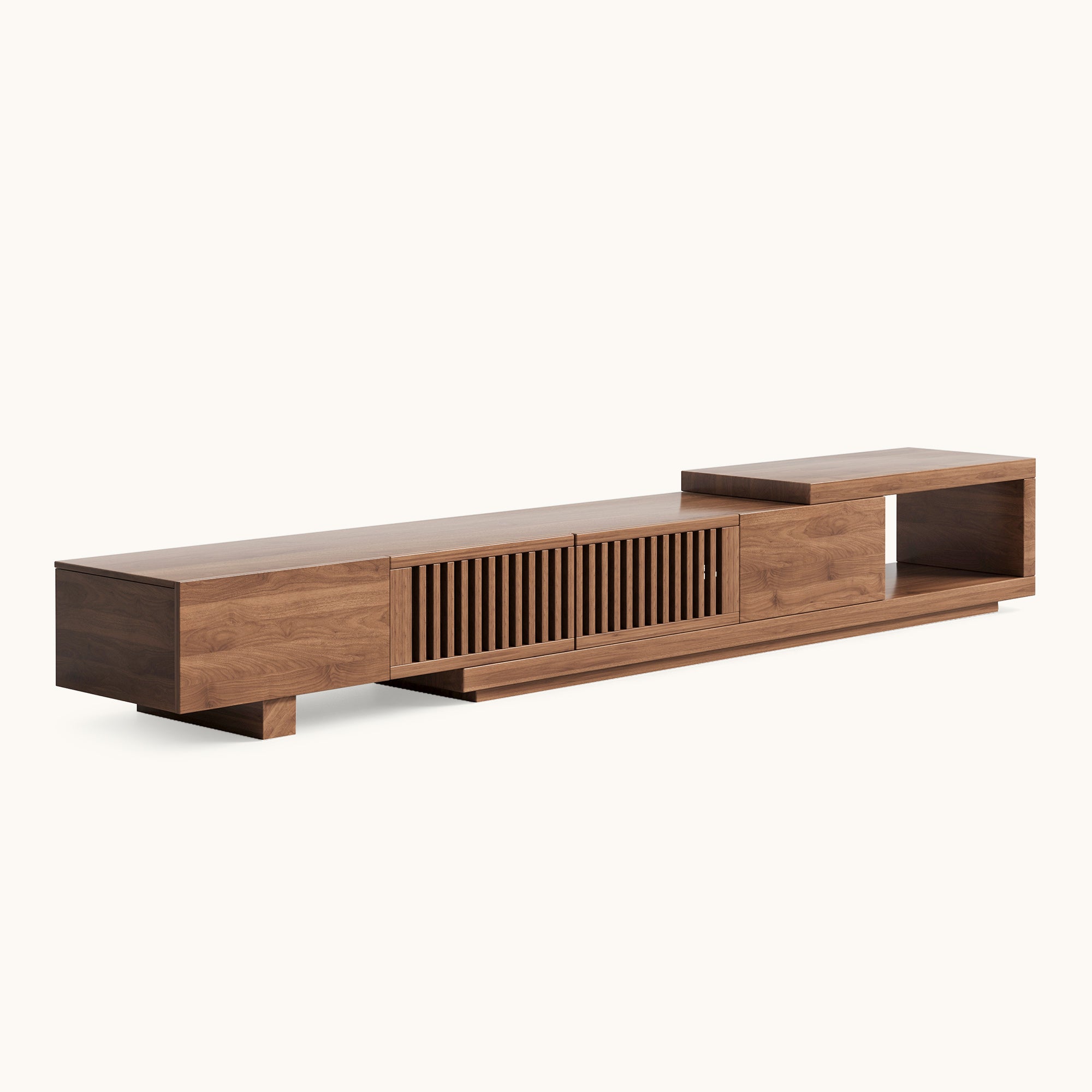


The coffee table is the quiet anchor of a living room, but its shape does more structural work than most people expect. Before you settle on a finish or a base style, the dimensions of your room and the way people move through it should narrow the field. A round coffee table is often the intuitive choice for tight or conversation-focused layouts, while a rectangular table tends to earn its place in longer rooms where surface area and storage matter. The right answer depends less on trend cycles and more on the geometry of the space you already have.
Why Room Shape Decides More Than Style
Interior designers generally work through size, shape, height, and material in that order, because each decision quietly constrains the next. Shape comes second for a reason: it determines whether the table cooperates with the room’s proportions or fights them. A table that looks beautiful in a showroom can feel pinched in a narrow living room or visually lost against a long sofa. The footprint of the table has to match the seating arc, the walking routes, and the dominant lines already present in the room.
When a Round Coffee Table Earns Its Place
Circular tables solve a specific set of spatial problems with unusual efficiency. In small or roughly square living rooms, the absence of corners means there is no protruding edge to navigate around, so people can slide past one another without side-stepping. Designers often reach for a circular table when the size of the space is at all compromised, precisely because it removes the corner that shins find first.
The shape also works exceptionally well with sectional sofas. On an L-shaped or U-shaped sectional, every seat needs roughly equal reach to the table. A rectangle can leave the end seats stretching awkwardly across a corner, while a round surface treats every seat the same distance from the center. For households with young children or energetic pets, the safety argument is just as practical: a curved table eliminates the sharp corner entirely, changing the nature of everyday furniture risk rather than merely reducing it.
Round designs also soften a room that is heavy on rectangles—sofas, media consoles, bookshelves, and rectangular rugs all benefit from a curved counterpoint in the center of the seating group. In larger rooms, a broad circular table can anchor a conversation layout without feeling imposing, while in compact apartments a smaller diameter keeps the floor plan feeling open.
FamiDear’s circular options reflect this logic. The round nesting coffee table set uses a two-piece design: a smaller table tucks underneath the larger one when not in use, then pulls out for guests or game nights. The smooth edges and open metal frame keep the visual weight low, which matters in square rooms where a solid block can close off sightlines. For a more vintage-leaning room, the Semo walnut round table brings a mid-century silhouette that softens the hard lines of modern shelving and rectangular rugs without adding bulk.
When a Rectangular Coffee Table Is the Smarter Fit
Rectangular tables follow the same linear proportions as a standard three-seater sofa, which is why the pairing feels immediately balanced rather than arbitrary. In a long, narrow living room, a rectangular table aligned with the sofa keeps a clear walking lane along one side. A round table in the same layout can drift toward the center of the walkway and make a tight room feel more pinched, not less.
Function is the other decisive factor. A rectangle typically offers more usable tabletop surface for the same footprint, and it is far more likely to include built-in storage—drawers, lower shelves, or hidden compartments that keep remotes, books, and everyday clutter out of sight. If the coffee table doubles as a workspace, a dining surface, or a hosting hub, the rectangular format earns its keep on a daily basis. For a closer look at how hidden compartments change the layout equation, this guide to coffee tables with hidden storage walks through six practical configurations.
FamiDear’s rectangular designs lean into that functional advantage. The mid-century expandable coffee table shifts from a compact footprint to an extended surface when guests arrive, with concealed storage underneath for books and remotes. The lift-top coffee table raises a section of the walnut-grain top to a comfortable working height and adds dual drawers at the base, turning the living room into a flexible office or dining nook without a second piece of furniture.
Round vs Rectangular Coffee Table: Side-by-Side Comparison
| Factor | Round Coffee Table | Rectangular Coffee Table |
|---|---|---|
| Best room shape | Small, square, or conversation-focused rooms | Long, narrow, or open-plan rooms with linear seating |
| Sofa pairing | Sectionals, U-shaped layouts, curved sofas, chaise arrangements | Standard three-seaters, long sofas, straight modular layouts |
| Traffic flow | No corners to navigate; smoother movement in tight seating groups | Defined walking lane along one side; can feel pinched if aligned poorly in narrow rooms |
| Usable surface | Less tabletop area for the same footprint; better for central reach than spreading out | More usable surface; better for laptops, board games, and serving |
| Storage potential | Limited in most round designs; nesting sets add flexibility | Commonly includes drawers, shelves, or hidden compartments |
| Safety with kids and pets | No sharp corners; fewer shin-level collisions | Corners can catch shins; softened edges or rounded corners reduce risk |
| Visual effect | Softens rectangular furniture and rugs; encourages conversation | Reinforces linear room architecture; feels structured and traditional |
| Stability | Pedestal or circular bases can wobble if poorly built | Four-leg construction is generally more stable |
This comparison is a starting point, not a verdict. In many open-plan homes, the most practical solution is a hybrid: a rectangular table for surface area, paired with a small round side table to soften the overall composition and improve circulation around the edges.
The Measurements That Override Shape Preference
Even the right shape fails if the proportions are wrong. Three rules cover most living rooms. Length: aim for a table roughly two-thirds the length of the sofa. A standard 84-inch sofa pairs well with a table around 48 to 54 inches long. Clearance: leave 14 to 18 inches between the sofa edge and the coffee table so the surface stays within reach without blocking movement. Height: the tabletop should sit one to two inches below the seat cushion for comfortable access.
Walkway clearance matters just as much. Ideally, leave 36 to 40 inches around the seating area, though 30 inches can maintain decent flow in tighter rooms. If the path between the sofa and a TV console, doorway, or kitchen feels like a squeeze, prioritize traffic flow over table size.
Hybrid Solutions for Rooms That Resist a Single Answer
Nesting tables and expandable designs blur the round-versus-rectangular binary. A round nesting set in warm walnut gives a compact room the option to expand surface area on demand, then tuck the second table away to reclaim floor space. An expandable rectangular table serves the same purpose from the opposite direction: it stays slim for everyday circulation and opens up when the room needs to work harder. These flexible formats are especially useful in studio apartments and open-plan layouts where the living room has to shift between quiet relaxation and active hosting.
If you are weighing whether storage-led designs justify their footprint, this analysis of whether storage coffee tables are worth it helps separate genuine utility from marketing claims. And because the table has to work with the seating, our notes on why a high-quality sofa matters explain how proportions and comfort interact over time.
FAQ
Does a round coffee table make a small room feel bigger?
Yes, in most cases. The absence of corners allows for easier movement around the seating group, and the curved edge keeps sightlines open at shin level. A round table with a diameter around 28 to 36 inches works well in compact living rooms, provided it sits within easy reach of the sofa.
Is a rectangular coffee table better for a long, narrow living room?
Generally, yes. A slim rectangular table aligns with the sofa’s linear proportions and preserves a defined walking lane along one side. A round table in the same layout can drift into the traffic path and make the room feel narrower than it is.
What shape works best with an L-shaped sectional sofa?
A round or oval coffee table is usually the most comfortable choice for an L-shaped or U-shaped sectional. The curved edge matches the natural bend of the walk path around the chaise, and every seat has a similar reach to the table’s center.
Can I use a round coffee table in a large living room?
Yes, provided the scale is generous enough. In a larger room, a round table with a diameter of at least 36 to 40 inches can anchor a conversation layout and soften the hard lines of rectangular sofas and rugs without feeling like a small dot in the middle of the floor.
How much clearance should I leave around a coffee table?
Leave 14 to 18 inches between the sofa and the table for comfortable reach and movement. For the surrounding walkways, aim for 36 to 40 inches where possible, and treat 30 inches as the minimum for acceptable flow in tighter rooms.
Explore the full range of shapes, sizes, and storage configurations in the FamiDear coffee table collection to match your room’s proportions.

