


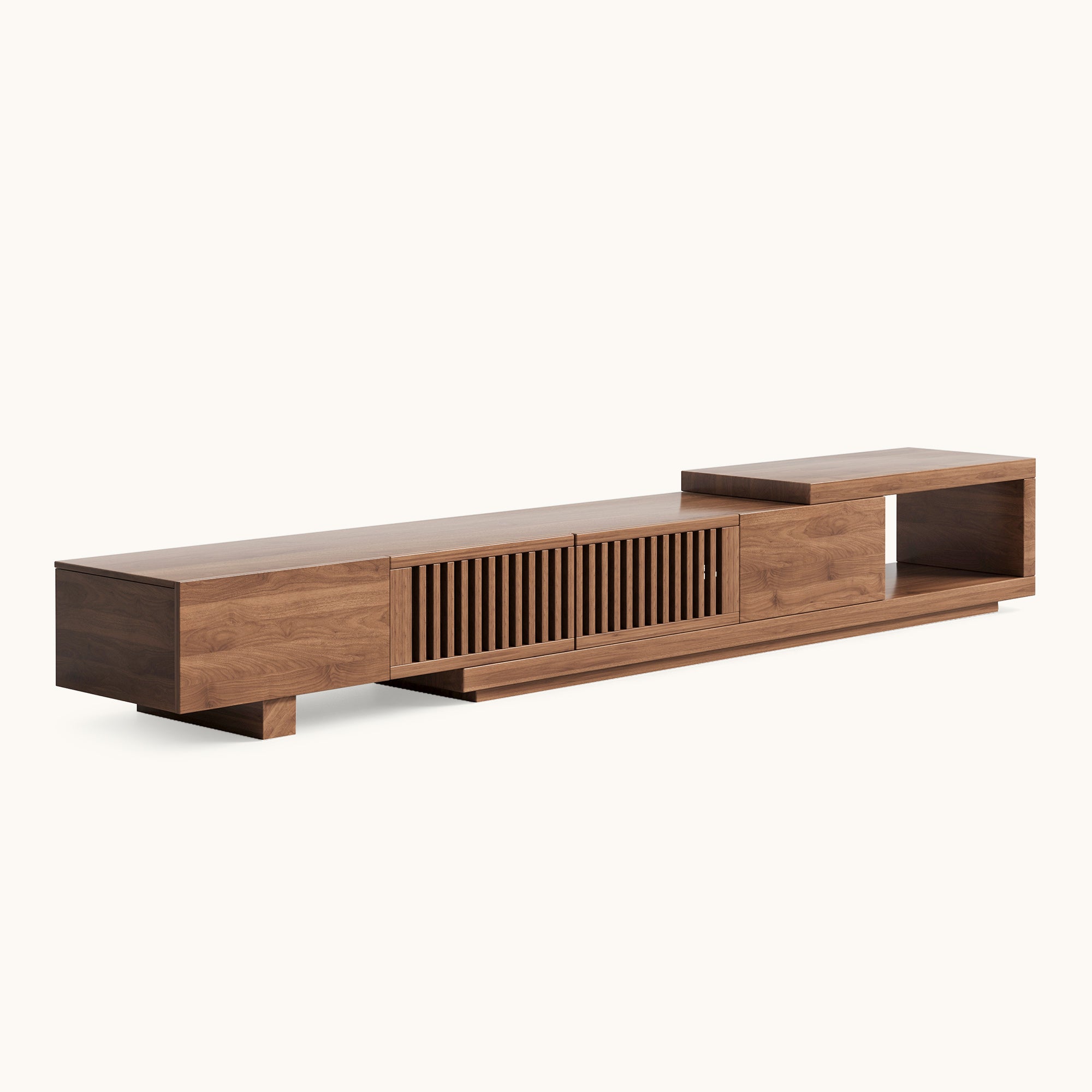


A coffee table with storage does more than hold a tray of snacks. It absorbs the small, persistent mess of living room life — remotes, chargers, magazines, stray blankets, game controllers — and keeps it out of sight without asking you to become a minimalist. The best storage coffee table does not look like a storage unit at first glance. It reads as furniture: sculptural, warm, intentional. The difference is that underneath the surface, or inside the frame, there is a system quietly working. Below are six approaches, each solving a different clutter problem, followed by a comparison table and a short guide to matching the design to your room.
Six storage designs and the clutter they solve
1. The concealed compartment: hiding what you reach for daily
The simplest storage move is a hidden cavity beneath the tabletop. It is where remotes, coasters, charging cables, and the book you are halfway through disappear when guests arrive. The advantage is speed: you lift or slide a panel, drop things in, and the surface returns to display mode. This format works best when you want concealment without adding drawers or open shelves that change the table’s silhouette. A mid-century expandable design with a concealed compartment takes the idea further by pairing hidden storage with a tabletop that widens when needed. In a small living room, that combination — concealed storage plus flexible surface — addresses two constraints at once.
2. The lift-top: storage that becomes a workspace
A lift-top mechanism raises part of the tabletop toward you, converting a low table into a surface at roughly 19 inches — close enough to type on a laptop or eat without hunching forward. Beneath the lifted top sits a shallow compartment for the items you want within arm’s reach but off the main surface: chargers, a notebook, the remote you keep misplacing. The trade-off is mechanical. Lift-top tables introduce hinges and moving parts, so the quality of the mechanism matters more than it does on a static drawer table. A well-built lift-top is sturdy when raised and smooth when closing; a cheap one wobbles or slams. A fluted lift-top table with dual base drawers adds a second layer of storage: the hidden compartment under the top handles small essentials, while the drawers below take books, snacks, or gaming gear that would otherwise migrate to the floor.
3. Built-in drawers: storage you can open without clearing the top
Drawers keep everyday items reachable without disturbing whatever is displayed on the surface. That distinction matters: with a lift-top or a removable lid, you often have to move a tray or a vase before you can get inside. A drawer slides out from the side or front and leaves the top untouched. Drawers sit in the “frequent, tidy retrieval” category — the right choice when the main job is keeping remotes, notepads, and magazines organized without ceremony. Drawers also suit households that accumulate gradually. A shallow drawer dedicated to living room small items prevents the tabletop from becoming the default drop zone. The risk, as with any storage, is that a drawer can become a more organized clutter container if it is never edited. A single drawer with a defined purpose — cables and controllers, for example — tends to stay useful longer than a deep, general-purpose cavity.
4. Nesting sets: storage as floor-plan flexibility
Nesting tables solve a different clutter problem. The clutter is not inside the table; it is the table itself taking up floor space when the room needs to breathe. A nesting pair lets a smaller table slide completely underneath the larger one, reducing the visual footprint to a single round silhouette. When guests arrive, the second surface pulls out for drinks, phones, or a plate of food. When they leave, it disappears again. Round nesting sets are particularly effective in compact apartments because the curved edges soften tight circulation paths and reduce the sharp-corner problem of rectangular tables. A round nesting pair in a two-tone finish or a round nesting set in warm walnut makes the flexibility visible without looking utilitarian — the smaller table reads as a design choice, not a folding chair.
5. The expandable tabletop: storage plus surface, in one footprint
An expandable table separates two needs that are often conflated: storage volume and usable surface area. The storage compartment stays fixed underneath, while the top extends — sometimes from a compact lounge configuration to a longer entertaining or working surface. This is not the same as a lift-top. A lift-top brings the surface closer; an expandable top makes the surface larger. The storage cavity beneath remains accessible either way. For open-concept or multifunctional rooms, the expandable format solves the problem of a table that is either too small for guests or too large for daily life. The storage component handles the clutter that accumulates around the sofa, and the expanding surface handles the moments when the table needs to become a dining table, a game surface, or a shared workspace. The compromise is that expansion mechanisms add hardware, so the frame needs to be sturdy enough to stay stable when fully extended.
6. Open shelf plus trays: visible storage for people who forget what they own
Not all storage should be hidden. An open lower shelf with baskets or trays keeps frequently used items visible and accessible while still containing them. The basket does the concealing; the shelf provides structure. This approach works well for households that want order without the “out of sight, out of mind” effect of a closed drawer. You can see the throw blanket, the kids’ toys, or the stack of magazines, but they are corralled into a defined zone. A vintage-inspired round table with a sculptural base can work as an open-storage anchor if the lower area is used intentionally — a woven basket for blankets, a tray for remotes, a stack of books that doubles as decor. Open storage is the most forgiving format: it adapts as the room’s needs change, and it does not depend on a mechanism that can fail.
Compare the six designs
| Design | Primary job | How you access storage | Storage visibility | Footprint / moving parts | Best-fit room |
|---|---|---|---|---|---|
| Concealed compartment | Hide daily small items under a clean top | Lift or slide a panel | Fully hidden | Fixed footprint; one moving panel or lid | Rooms where the table is also a display surface |
| Lift-top | Raise a work or dining surface toward the sofa | Lift and lock the top | Hidden, usually shallow | Fixed footprint; hinge mechanism | Sofa-based laptop work or casual meals |
| Built-in drawers | Keep everyday items reachable without clearing the top | Pull open from the side or front | Fully hidden | Fixed footprint; sliding drawer | Households that want fast, tidy retrieval |
| Nesting set | Add or remove surface area as the room changes | Separate or tuck the smaller table | Little to none (spatial storage) | Variable footprint; tables move independently | Small rooms needing flexible guest surfaces |
| Expandable top | Increase surface area without adding a second table | Extend the top; storage cavity stays below | Hidden | Fixed storage; expanding top mechanism | Multifunctional or open-concept living rooms |
| Open shelf + trays | Keep items visible but contained | Reach in directly | Visible | Fixed footprint; no moving parts | Households that prefer accessible, adaptable storage |
This table reflects functional differences, not quality rankings. A lift-top is not better than a drawer; it is better at a specific task. The right format depends on what happens at the table most days — not on which mechanism sounds most impressive.
How to choose without over-storing
The first question is not “how much storage can I get?” It is “what do I actually do at this table?” If the answer is “work on a laptop from the sofa,” a lift-top earns its hardware. If it is “I just need the remotes off the surface,” a drawer or concealed compartment is simpler and has fewer parts to wear out. If the room needs to change when guests arrive, nesting or expanding surfaces solve a spatial problem that internal storage cannot.
The second question is visibility. Closed compartments are psychologically satisfying because the mess disappears, but they also require you to remember what is inside. Open shelves and trays trade concealment for accessibility. A mixed approach often works best: a closed compartment for things you rarely need during the day, and an open shelf or tray for the items in constant rotation. The goal is not to store everything — it is to make the room’s daily rhythm smoother.
The third question is scale. A storage table that is too deep or too tall for the sofa will feel like a second piece of furniture crowding the room, regardless of how clever its compartments are. Measure the sofa length and leave 40–45 cm of walking clearance around the table before committing to a format. A nesting set or a round table can preserve circulation better than a deep rectangular chest, even if the chest technically holds more.
Finally, consider the material and finish in relation to maintenance. Wood veneer and MDF are common in storage tables because they resist warping and hold their shape around hinges and drawers. But the finish matters: a textured or fluted surface hides minor wear better than a high-gloss top, and a water-resistant finish makes spills less stressful on a table that doubles as a dining surface. The storage mechanism should feel as considered as the exterior, because the interior is where the clutter actually lives.
Continue the room edit
Storage decisions rarely stay inside one piece of furniture. If cable and remote clutter also collects around the television, this guide to TV stand cable and remote organization shows how to keep that zone just as calm. Because the table’s height and depth only work when the seating is right, it helps to understand what makes a high-quality sofa worth owning before locking in a table size. And if you are rethinking the room’s center, this piece on the coffee table as the living room’s center connects the storage choice back to the way the whole room is used.
A note on the collection
The designs above are not abstract categories. They correspond to different pieces within the full coffee table collection, each built around a specific clutter problem: concealment for daily small items, lift-top access for sofa work and dining, nesting flexibility for compact rooms, and expanding surfaces for multifunctional spaces. Browsing the full range is the fastest way to see how these formats differ in proportion, finish, and mechanism before choosing the one that matches your room’s daily routine.
FAQ
What is the difference between a storage coffee table and a regular coffee table?
A storage coffee table integrates compartments, drawers, a lift-top mechanism, or a nesting design into the table itself, so everyday items can be kept in the piece rather than in separate bins or baskets. A regular coffee table offers only the surface.
Is a lift-top table stable enough for a laptop?
A quality lift-top with a sturdy hinge and a solid frame can support a laptop comfortably at sofa height. The mechanism should lock firmly when raised and close slowly. Cheaper lift-tops may wobble; the build quality of the hinge matters more than the lift-top format itself.
Do nesting tables provide any enclosed storage?
Not usually. Nesting tables provide spatial storage: the smaller table tucks underneath the larger one, freeing floor area. Some nesting sets include drawers in the smaller table, but the primary storage benefit is flexibility of footprint, not concealment.
How do I stop a storage coffee table from becoming a clutter container?
Define what belongs in each compartment and edit it periodically. A shallow drawer or concealed compartment works best when it has a specific job — cables, remotes, coasters — rather than serving as a general-purpose catch-all. Open shelves with baskets make it easier to see when something needs to be removed.
Can a storage coffee table work in a small living room?
Yes, if the format matches the constraint. A nesting set or a round table preserves circulation; a lift-top adds a workspace without a separate desk; an expandable table provides guest seating without a second surface. The key is measuring clearance and choosing a mechanism that does not require extra floor space to operate.
What materials are most durable for a storage coffee table?
Wood veneer over MDF is common because it resists warping around hinges and drawers, and powder-coated steel frames add stability. Look for water-resistant finishes on tables that double as dining surfaces, and choose a textured or fluted exterior if you want to hide minor wear.

